What AI tenants are teaching us about the future of office space
Posted:
5 / 26 / 2026
Tagged:
There’s a prevailing narrative in commercial real estate that AI will erode office demand. Fewer headcounts, more automation, less space required. Despite these concerns, if you look at what’s actually happening right now in the NYC leasing market, the story is more nuanced.
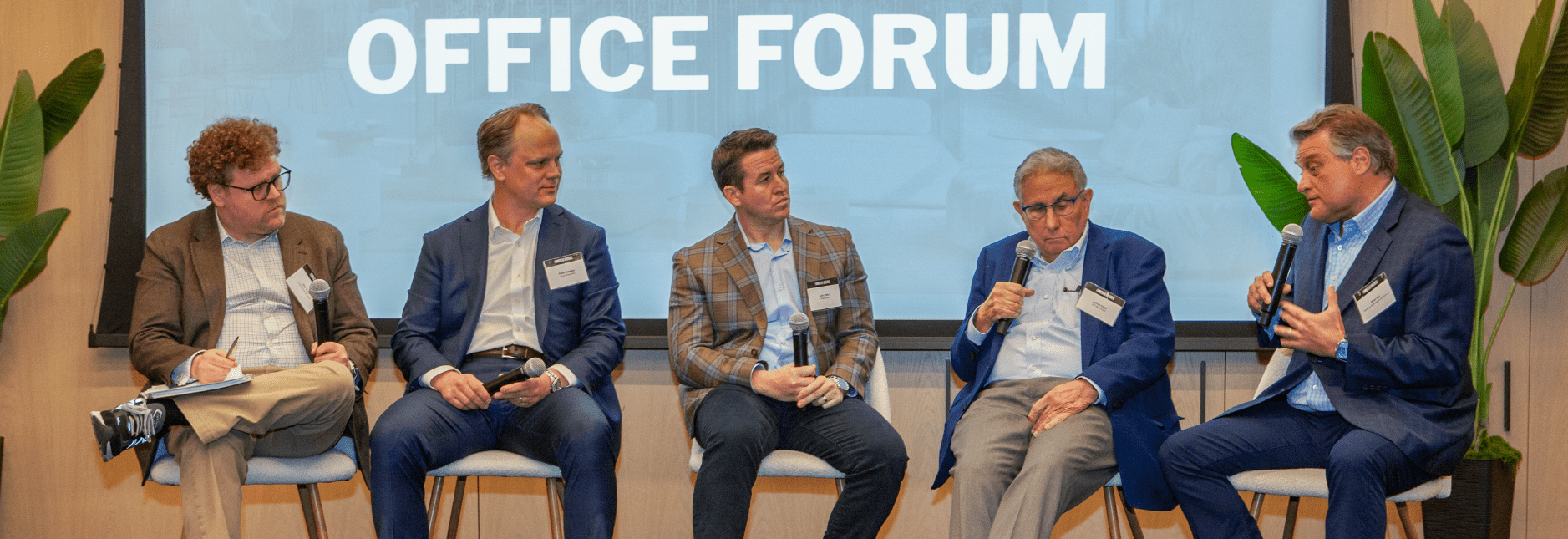
I recently spoke at Commercial Observer’s State of Office Forum and these were my four takeaways. I was joined by Peter Brindley, Executive Vice President and Head of Real Estate at Elecor Properties; Jeffrey Gural, Chairman and CEO of GFP Real Estate; and Brian Ray, Managing Partner at Alchemy-ABR Investment Partners. The panel was moderated by Max Gross, Editor-in-Chief of Commercial Observer.
1. AI startups are driving real leasing volume
In New York City, roughly 30% of all tech leasing last year came from AI startups. By Q1 2026, they had already surpassed the total leasing volume from the entirety of H1 2025. Average deal size has nearly doubled, from around 16,000 sq ft to over 30,000 sq ft.
This isn’t speculative demand. AI companies are actively leasing, at scale, in markets like NYC and San Francisco. That’s the reality on the ground.
2. Their requirements are simple but specific
What distinguishes AI tenants from traditional enterprise occupiers is organizational structure. There are no large corporate real estate teams, no internal IT functions managing procurement and build-out. Almost everyone is focused on the product. That means their brief is straightforward: fast move-ins, quality buildings, technology that works.
The clients we work with who lead with all three as part of their value proposition are consistently winning with this tenant profile. It has become a genuine differentiator in how landlords position their assets.
3. Move-in ready has become a portfolio strategy, not a product type
This isn’t just an AI story. Across the broader market, move-in ready products are outperforming. For spaces under 30,000 sq ft it’s the clear frontrunner. For sub-10,000 sq ft spaces specifically, 80% of leases signed across the US today are for move-in ready products, compared to 50% in 2019. These spaces also lease around 50% faster.
Tenants are not willing to commit capital to fit-outs or absorb multi-month lead times. That preference is now structurally embedded in leasing behavior, and owners who haven’t responded to that are feeling it.
4. There’s a technology gap that hasn’t been solved yet
When you put both trends together – AI companies moving fast and move-in ready product leasing fastest – a specific problem surfaces. Network setup is still taking 8 to 10 weeks and costing tenants $2–$4 per sq ft. For a tenant who specifically chose a space to avoid delays, that’s a significant friction point that undermines the entire proposition.
Connectivity needs to be treated as part of the move-in ready package, not an afterthought. The landlords who figure that out first will have a meaningful edge with the tenant base that is currently driving the most leasing activity in the market.